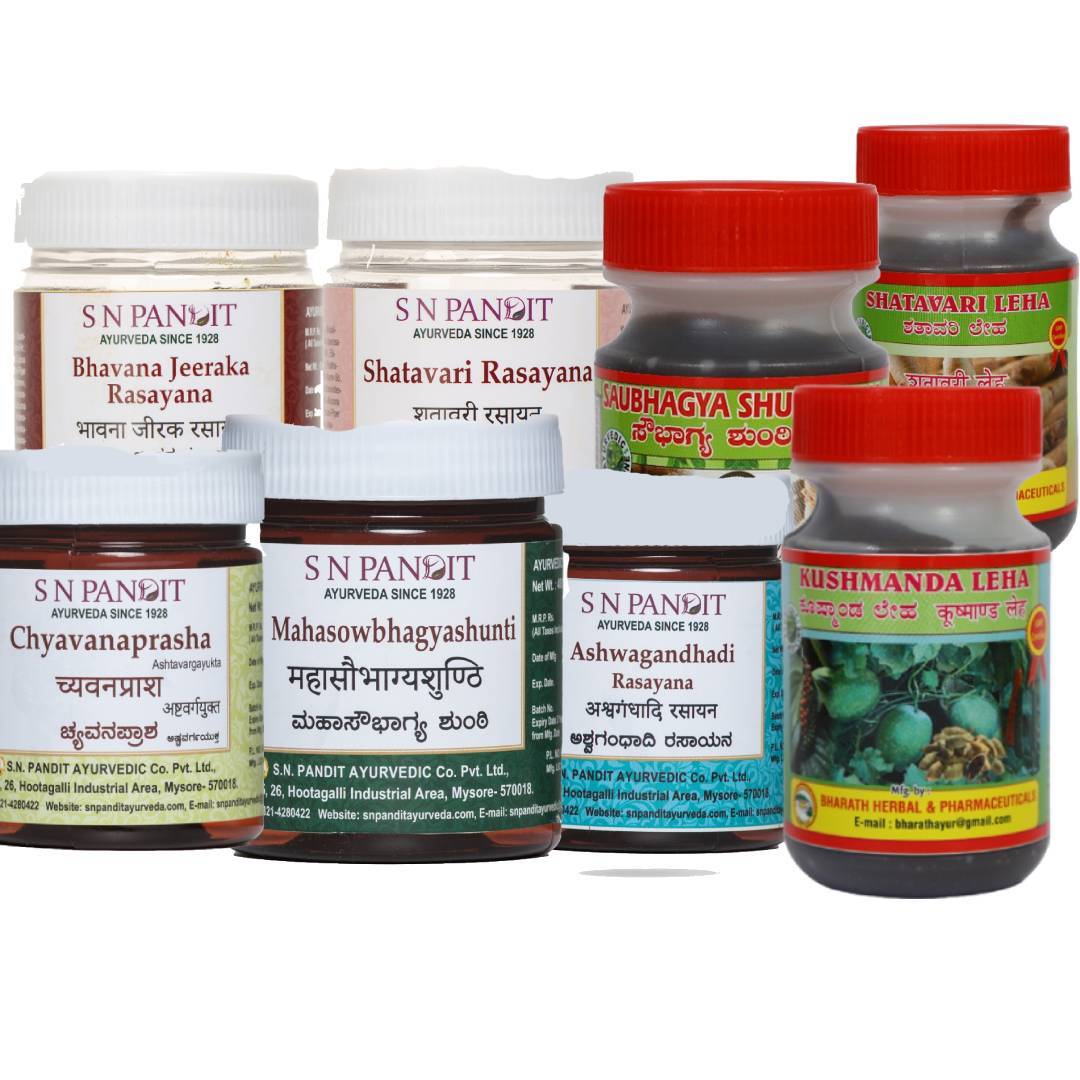
Ayurveda offers a rich pharmacy of natural remedies prepared in various forms – powders, tablets, oils, decoctions, and more. Among these, you might encounter terms like 'Lehyam' and 'Rasayana'. While sometimes used together, they refer to distinct aspects of Ayurvedic medicine. Let's break them down:
What is a Lehyam? (The Form)
A Lehyam (also spelled Lehya or Leham) refers to a specific semi-solid consistency of an Ayurvedic preparation. Think of it like a herbal jam, paste, or electuary.
● Composition: Lehyams are typically made by processing herbs, fruit pulp (like Amla or Bael), or other medicinal ingredients with natural sweeteners like jaggery, sugar, or honey, often combined with ghee or तले (oil). The mixture is usually cooked down to achieve a thick, spoonable consistency.
● Purpose of the Form: This form is chosen for several reasons: ○ Palatability: It makes it easier and more pleasant to consume herbs that might otherwise be bitter or unpalatable, making them suitable for people of all ages, including children and the elderly. ○ Absorption: The base ingredients like ghee and honey are believed to help in the better absorption and delivery of the herbal properties within the body. ○ Stability: The high sugar/jaggery content acts as a preservative, giving the preparation a longer shelf life compared to fresh juices or decoctions.
● How it's Consumed: Lehyams are usually licked or swallowed directly, often followed by warm milk or water.
● Example: The most famous example of a Lehyam is Chyawanprash.
In simple terms, a Lehyam is a specific type of Ayurvedic product based on its physical form – a therapeutic paste or jam.
What is a Rasayana? (The Purpose/Therapy)
The word 'Rasayana' is derived from two Sanskrit words: 'Rasa' (meaning essence, juice, plasma, or internal secretion) and 'Ayana' (meaning path, circulation, or vehicle). Therefore, Rasayana literally means the "path of essence" or "that which circulates in the body's essence."
● Core Goal: Rasayana is not a specific physical form, but rather a category of Ayurvedic therapy focused on rejuvenation, revitalization, and promoting longevity. The primary goals of Rasayana therapy include: ○ Delaying aging and preventing debility. ○ Enhancing immunity and resistance to disease. ○ Strengthening the body's tissues (Dhatus). ○ Improving mental function and clarity. ○ Promoting overall health and vitality.
● Forms: A Rasayana can be administered in various forms – it could be a powder (Churna), a tablet (Vati), a medicated ghee (Ghrita), a specific diet, or even a particular lifestyle practice.
● Focus: The emphasis of a Rasayana is on its intended action – its ability to nourish deeply, regenerate tissues, and enhance overall well-being at a fundamental level.
In simple terms, Rasayana is a category of therapy or a beneficial action aimed at rejuvenation and longevity.
The Connection: When a Lehyam is a Rasayana
Here’s where the two concepts often intersect: Many Ayurvedic formulations designed specifically for their rejuvenating (Rasayana) effects are prepared in the Lehyam form. Chyawanprash is the perfect illustration – it is a classic Rasayana formulation known for its anti-aging and immunity-boosting properties, and it is prepared as a Lehyam (a semi-solid paste) for easy and enjoyable consumption. So, while not all Lehyams are Rasayanas (some Lehyams might be for digestion, cough, etc., without a primary rejuvenation focus), many important Rasayana preparations are indeed Lehyams. And conversely, Rasayana therapy can involve forms other than Lehyams.
On our website, you will find a variety of Ayurvedic preparations, including nourishing Lehyams (many of which serve as potent Rasayanas) and other formulations aimed at supporting your vitality and well-being.
Explore our collection of Lehyams and Rasayanas to support your health journey: https://www.aryuvedicstore.com/categories/lehaslehya-rasayana_/2295293000000044347
Disclaimer: This information is for educational purposes only